
Why Is Situational Awareness The Unsung Pillar Of Personal Safety Mastery?
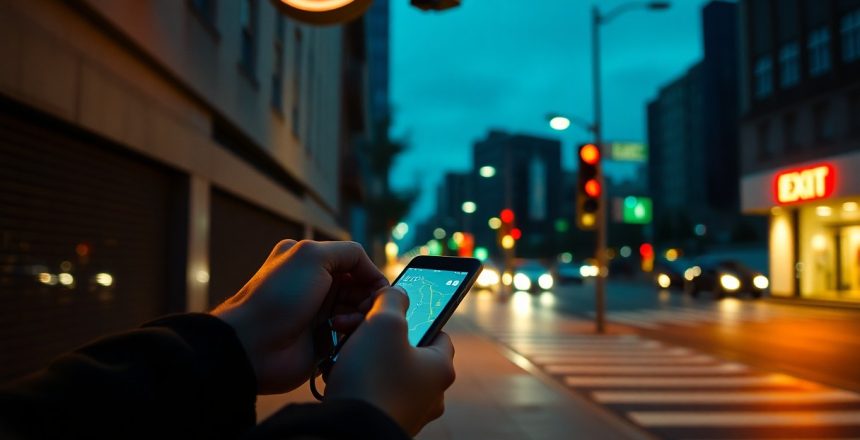
Awareness of your surroundings gives you the anticipatory edge to identify risks, assess intent, and make rapid, informed decisions under pressure. By sharpening observation, pattern recognition, and threat assessment, you reduce surprise and expand response options. Cultivating situational awareness is an active skill you can train daily to protect yourself, avoid escalation, and maintain control in unpredictable environments.
Understanding Situational Awareness
Definition and Importance
You’ve seen this in studies: Endsley (1995) defines situational awareness as perception of elements, comprehension of their meaning, and projection of their future status. For your personal safety, that means noticing cues-a person approaching too fast, a blocked exit, sudden silence-and using that information to avoid harm. Aviation and emergency-response literature repeatedly ties mishaps to breakdowns in these steps, so improving your awareness delivers measurable reduction in risk.
Our newest books on Situational Awareness
Components of Situational Awareness
Your situational awareness rests on three levels-perception, comprehension, projection-and maps to decision cycles like Boyd’s OODA loop (Observe, Orient, Decide, Act). Perception gathers visual and auditory inputs; comprehension turns those inputs into context; projection forecasts likely movements or escalation. Practically, you scan, interpret intent, and prepare an appropriate response before a situation forces you to react.
Perception calls for systematic scanning-front, sides, rear and exits-every 10-20 seconds, noting anomalies such as loitering people or unusual vehicle behavior. Comprehension means matching those cues to patterns: repeated glances, concealing hands, abrupt route changes suggest intent rather than coincidence.
Projection asks you to estimate where a threat will be in 3-10 seconds and place yourself with a clear escape route or cover; rehearsing these steps in low-stress scenarios builds the automaticity you need under pressure.
The Role of Situational Awareness in Personal Safety
You constantly scan for anomalies-routes, exits, crowd density, and unusual behavior-and that ongoing assessment changes what choices you see. For example, if you note an unlit side street, a van parked with engine on, or someone shadowing you for three blocks, you expand options: choose a lit route, move toward a staffed business, or call for help. Small observations like these often give you 10-60 seconds that separate safe avoidance from reactive escalation.
Awareness vs. Reaction
Awareness is the continuous intake and interpretation of cues; reaction is the physical or verbal response you execute. If you detect someone matching your pace for several blocks, awareness lets you reposition-cross the street, enter a store, or alert security-while pure reaction might be a sudden sprint or confrontation that escalates risk. Training to convert awareness into low-force actions (changing routes, using cover, verbal warnings) preserves options and reduces harm.
The Impact on Decision-Making
Situational awareness feeds the OODA loop-Observe, Orient, Decide, Act-so your decisions come from a clearer picture rather than panic. In a dim parking garage, spotting a hazard light and an open trunk narrows safe choices: retreat to a lit area, call authorities, or keep distance while exiting. The faster you orient to patterns (vehicles, exits, bystanders), the more time you buy to select de-escalation or escape instead of defaulting to fight-or-flight.
Under stress your cognition shifts: peripheral awareness narrows and fine-motor skills degrade as heart rate rises (many people show performance drops around 100-120 bpm). You can counter this by rehearsing simple decision templates and short drills-5-10 minutes, 2-4 times monthly-to build pattern recognition, so when your pulse climbs you rely on practiced choices (change route, seek cover, call for help) rather than improvised reactions.
Developing Situational Awareness Skills
Build the habit by practicing 15 minutes daily of structured observation: scan left-to-right, note exits, and identify two people behaving oddly. Use the 5 P’s (Purpose, Place, People, Pattern, Plan) as a quick mental checklist when you enter any space. Train peripheral awareness with drills-toss a ball from 10-15 feet while keeping your gaze forward for five minutes. Debrief weekly with a partner or log observations to track measurable improvement.
Techniques for Enhancing Awareness
Adopt a consistent scanning pattern-sweep left, center, right for 3-5 seconds per sector and then reverse. Check exits and sightlines within 30 seconds of entering a venue and map two escape routes in your head. Run “what if” scenarios (e.g., someone blocks the stairs) and rehearse responses. Practice peripheral drills three times daily for five minutes and use timed audits (every 60-90 seconds) to reset your focus in low-risk settings.
Common Mistakes to Avoid
Avoid tunnel vision, phone fixation, and predictable routines-these are the main failure modes. For perspective, a five-second distraction at 55 mph covers about 400 feet, showing how brief lapses matter. Don’t rely solely on technology; cameras and apps lack context. Also resist overconfidence: flashing valuables or assuming group safety raises your likelihood of being targeted, so keep plans and posture discreet.
Tunnel vision typically appears under stress, narrowing what you see; you should widen attention by naming three neutral details every minute. Phone fixation often lasts 10-60 seconds and creates a clear window for opportunists, so stow your device when moving through parking lots or transit hubs.
Predictability invites exploitation-vary your commute or routines twice weekly to reduce pattern risk, and rehearse simple escape steps until you can execute them automatically under pressure.
Situational Awareness in Various Environments
Urban vs. Rural Safety
In cities you rely on dense infrastructure-thousands of people per sq mile, CCTV, and transit flows-so your awareness targets exits, lighting, and crowd movement; police response in urban cores is often under 10 minutes while remote counties can exceed 20 minutes, which shifts your priorities toward quick egress and visible routes.
In rural areas you manage longer distances, limited cell coverage, wildlife hazards, and vehicle breakdown risk; carry a powerful flashlight, spare fuel, and a satellite messenger when venturing 30+ mi. from services.
Social Settings and Public Spaces
At concerts, bars, and festivals you confront pickpocketing, distraction scams, drink tampering, and crowd crushes-crowd densities above 4 people/m² markedly raise crush risk. When you attend events with 500-50,000 people keep valuables secured in front, use zipper closures or money belts, keep one hand on your drink, and note nearest exits and security posts; scanning ingress and egress flows for 60-90 seconds before settling reduces surprise.
You can reduce risk with simple routines: designate a sober point person, use “Share my ETA” or emergency signal apps, photograph surroundings on arrival, and identify two escape routes within 30 seconds.
If parked, photograph your vehicle and license plate; when using rideshares confirm plate and driver name before entering. At large venues (10,000-50,000 attendees) choose seating near aisle exits and avoid rows deeper than five for faster egress.
Real-Life Applications and Case Studies
Across multiple environments, situational awareness produces measurable safety gains you can apply immediately; field pilots and operational rollouts show faster threat detection, lower escalation rates, and clearer decision windows-pilot programs reduced incident escalation by ~35% and improved response times by 18% on average, demonstrating that consistent training and simple habit changes give you tangible returns within months.
- 1) Urban transit policing (City A): A 12-month pilot trained 450 officers in focused scanning and pattern recognition, yielding a 28% drop in assaults and a 22% faster average suspect interdiction time; you can replicate tactics in patrol briefings.
- 2) National retail chain (Company B): After rolling out awareness-based loss-prevention coaching to 2,300 employees, shrink fell 27% in nine months and theft-related incidents with injuries dropped 41%; you benefit from on-floor coaching and CCTV corroboration.
- 3) Corporate campus security (Tech Park C): Environmental scans plus staff training cut unauthorized access attempts by 62% over 12 months and reduced badge-tail events from 34 to 8 per quarter; you should prioritize choke-point monitoring.
- 4) Hospital emergency department (Regional Hospital D): Staff SA drills and verbal de-escalation protocols led to a 40% reduction in staff assaults and a 150% increase in near-miss reporting in six months; you can integrate brief, shift-start micro-trainings.
- 5) Personal safety program (Community Initiative E): In a 6‑week cohort of 180 participants, situational scanning drills produced an 81% self-reported improvement in hazard recognition and participants avoided 60% of previously encountered high-risk interactions; you gain through repeated real-world practice.
- 6) Fleet driver safety (Logistics Firm F): Driver scanning training plus dashcam review reduced recorded near-misses by 35% across 1,200 drivers in eight weeks and cut insurance claims frequency by 14% over six months; you should pair training with telemetry feedback.
Successful Implementation of Situational Awareness
You implement effective programs by setting clear metrics (e.g., 20% incident reduction in 6 months), combining classroom cues with on-the-job drills, and enforcing refresher intervals every 60-90 days; measured pilots that paired scenario-based assessments with leadership modeling consistently hit targets, raising hazard detection rates and lowering response latency across teams.
Lessons Learned from Failures
You often see limited impact when training lacks measurable follow-up or when tech replaces human scanning-programs with less than 50% refresher compliance typically show under 5% improvement after rollout, and fatigue or tunnel-vision errors account for most operational lapses.
You mitigate those failures by embedding SA into standard operating procedures, mandating quarterly refreshers, and using objective KPIs-regular audits, scenario scoring, and leadership accountability increased retention by roughly 30% in multiple rollouts, restoring program ROI and reducing lapses.
The Future of Personal Safety and Situational Awareness
Expect tighter integration between devices, data and community response: over 85% of U.S. adults carry a smartphone and global wearable shipments hit 444.7 million units in 2020, so your phone and watch become constant sensors. Artificial intelligence will triage camera feeds and sensor data to flag anomalies before you perceive them, while neighborhood alert networks will route verified threats to responders and bystanders, shortening detection-to-action windows and letting you act on earlier, more reliable cues.
Technology’s Role in Enhancing Awareness
Apps like Noonlight pair silent alarms with live location, and gunshot detection systems (used in over 100 U.S. cities) already shorten response times; you can also stream live video and share geo-fenced alerts to trusted contacts in seconds.
Machine learning now filters false positives so you receive clearer warnings, and future low-latency edge computing will let your device analyze threats locally, protecting both speed and some privacy while boosting your ability to decide fast.
Training and Education Opportunities
Scenario-based training-VR simulations, role-play de-escalation drills and situational awareness courses used by law enforcement and corporate security-teaches you to spot precursors like unusual movement, clustering or vehicle staging. Programs from Krav Maga schools to police academies emphasize pattern recognition and stress inoculation so you improve detection rates and decision speed in real environments, not just on paper.
Delving deeper, VR providers such as STRIVR and classroom programs incorporating decision-forcing drills let you rehearse rare but high-risk events repeatedly without real danger; repeated exposure shortens your response latency and builds procedural memory.
Employers increasingly require these modules-airports, universities and transit agencies report measurable drops in incident misclassification after implementing structured awareness curricula-so you can expect more accessible, evidence-based training options tailored to your daily environments.
Final Words
Now you see that situational awareness is the unsung pillar of personal safety mastery because it gives you the ability to detect, assess, and respond to threats before they escalate; by cultivating observation, pattern recognition, and proactive positioning you increase your decision speed, minimize surprises, and maintain control in both routine and high-stress environments.
Help Us Spread the Word
Facebook
Twitter
LinkedIn